Antje Peters
Scientist (she/her)
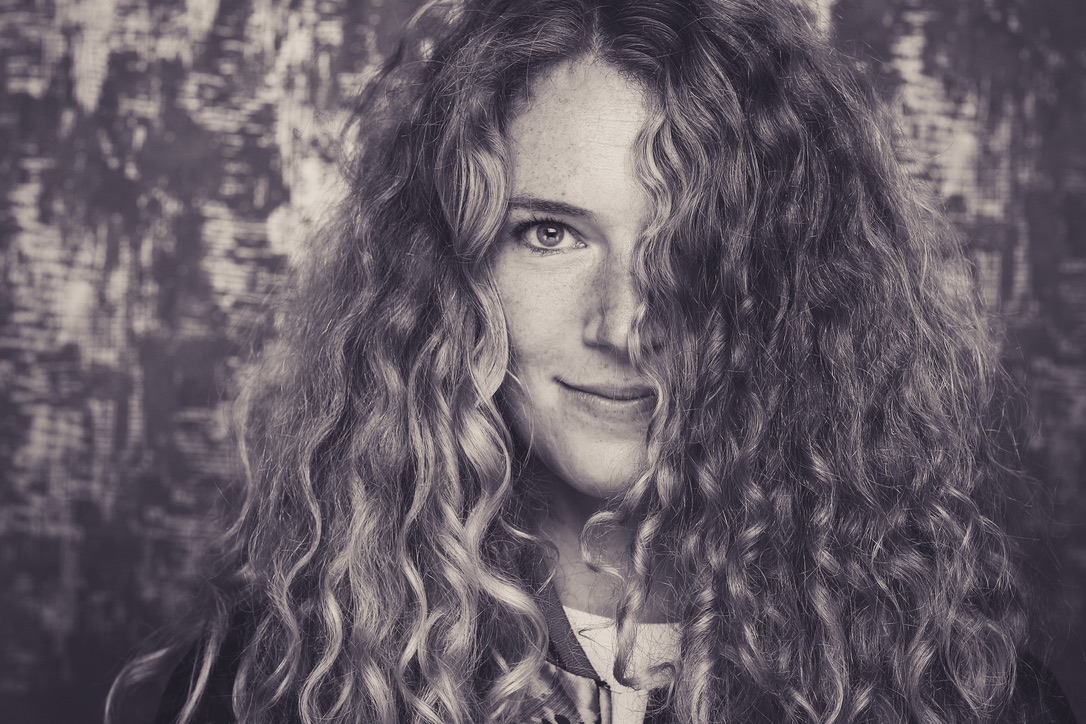
Scientist (she/her)
I use modern methods of electrophysiology and imaging to investigate the neural mechanisms of the phenomeon which makes live worth living: conscious perception.
My scientific research focuses on the neurobiological underpinnings of long-lasting conscious perception. The central question is which neural processes enable not only the onset but, in particular, the maintenance of conscious perception over time. While a significant proportion of research to date on neural correlates of consciousness (NCC) has focused on short, discrete stimuli, my research addresses a central, but underrepresented aspect of conscious perception: its temporal continuity.
My experiments allow for variation in the duration of conscious perception of stimuli. This allows for the isolation of neural effects associated with stimulus duration, memory processes, and conscious perception. The hippocampus is a particular focus, as its role in maintaining conscious perception has not yet been systematically investigated.
The research I plan to conduct next builds on extensive non-invasive work. However, intracranial EEG represents the next necessary step in recording the neural mechanisms of long-lasting conscious perception. The method is characterised by its exceptional precision in identifying the temporal and spatial correlates of long-lasting conscious perception. In perspective, a better understanding of the processes that maintain conscious perception over time in the temporal lobe opens up new perspectives for the targeted treatment of temporal lobe epilepsy.
I studied physics and computer science at Goethe University Frankfurt am Main. I undertook research stays at the Massachusetts Institute of Technology and the University of Arizona (USA). In 2017, I gained my PhD in theoretical physics (Lattice Gauge Theory). I conducted postdoctoral research in theoretical physics and human genetics. In parallel, I studied human medicine.
Between 2021 and 2024 I was a postdoc at the Institute of Medical Psychology and Systems Neuroscience in Münster, where I investigate neural correlates of consciousness and neural correlates of social feedback with EEG and fMRI. I was the head of the research group Transient and sustained neural mechanisms of conscious perception.
Since November 2024 I am a medical doctor with special interest in neurology. Since September 2025, I work as a resident physician at the Epilepsy Center Rhein-Main at the University Hospital Frankfurt am Main.
Find my physics publications at INSPIRE HEP and my neuroscience publications at PubMed. My PhD thesis in physics (Investigation of four-quark systems by means of Lattice QCD), my Master's thesis in physics (Determination of LambdaMSbar from the static quark-antiquark potential in momentum space) as well as my Bachelor's theses in physics (Baryonische Zweikörperzerfälle im erweiterten Linearen Sigma-Modell) and computer science (Das Aufzählungsproblem für Anfragen erster Stufe auf Strukturen von beschränktem Grad).
You can read my chapter about Artificial intelligence in clinical decision-making for diagnosis of cardiovascular disease in a book about Epigenetics in Cardiovascular Disease, edited by Yvan Devaux and Emma Robinson (ISBN: 9780128222584).